
A Google core update is a broad change to Google’s ranking systems, not a penalty aimed at your site. Most sites need no action. If your traffic fell after one, wait for the rollout to finish plus one more week, compare matching periods in Search Console, and judge whether the drop is small or large before you change anything. This guide explains how core updates work, who they affect, how to read your data and how to assess your content. Google’s November 2026 core update began on 10 November 2026.
What Is a Google Core Update?
A core update is a significant, broad adjustment to Google’s search systems, made several times a year. Google’s core updates guidance says the aim is to show helpful and reliable results overall, and that these changes do not target specific sites or pages.
Google compares the process to refreshing a personal list of favourite restaurants. New places open, older ones are reassessed and the list changes. A page that moves down has not necessarily done anything wrong, because other pages may now fit the search better.
How Is It Different From a Spam Update?
A spam update improves detection of pages that break Google’s spam policies. A core update reassesses relevance and quality across the whole results page. A drop after a spam update points you toward policy violations. A drop after a core update points you toward whether your content is the best answer available.
Which Sites Are Affected, and When Should You Worry?
Google says most sites do not need to worry about core updates and may not notice one. Any site can move, though, because rankings are relative: your page competes with every other page that answers the same query.
Worry only when both of these are true:
- Your clicks or positions fell by a meaningful amount after the rollout.
- The drop lasted beyond the normal ups and downs of your data.
A short dip during the rollout is not enough evidence to act. Rankings often shift while an update is still rolling out.
Other causes can look similar. Seasonal demand, tracking changes, a site migration or server problems can all reduce traffic. Compare the dates of any site changes with the date your traffic moved, and rule those out before you blame the update.
What Is the Status of the November 2026 Core Update?
Google’s Search Status Dashboard lists the November 2026 core update as starting on 10 November 2026. A Search Engine Roundtable report quotes Google saying the rollout may take up to two weeks. At the time of writing, on 18 November 2026, I could not confirm an end date. Check the Search Status Dashboard for the end date before you analyse anything, because comparing data in the middle of a rollout mixes old and new results.
How to Check a Traffic Drop in Search Console
Follow Google’s order of checks:
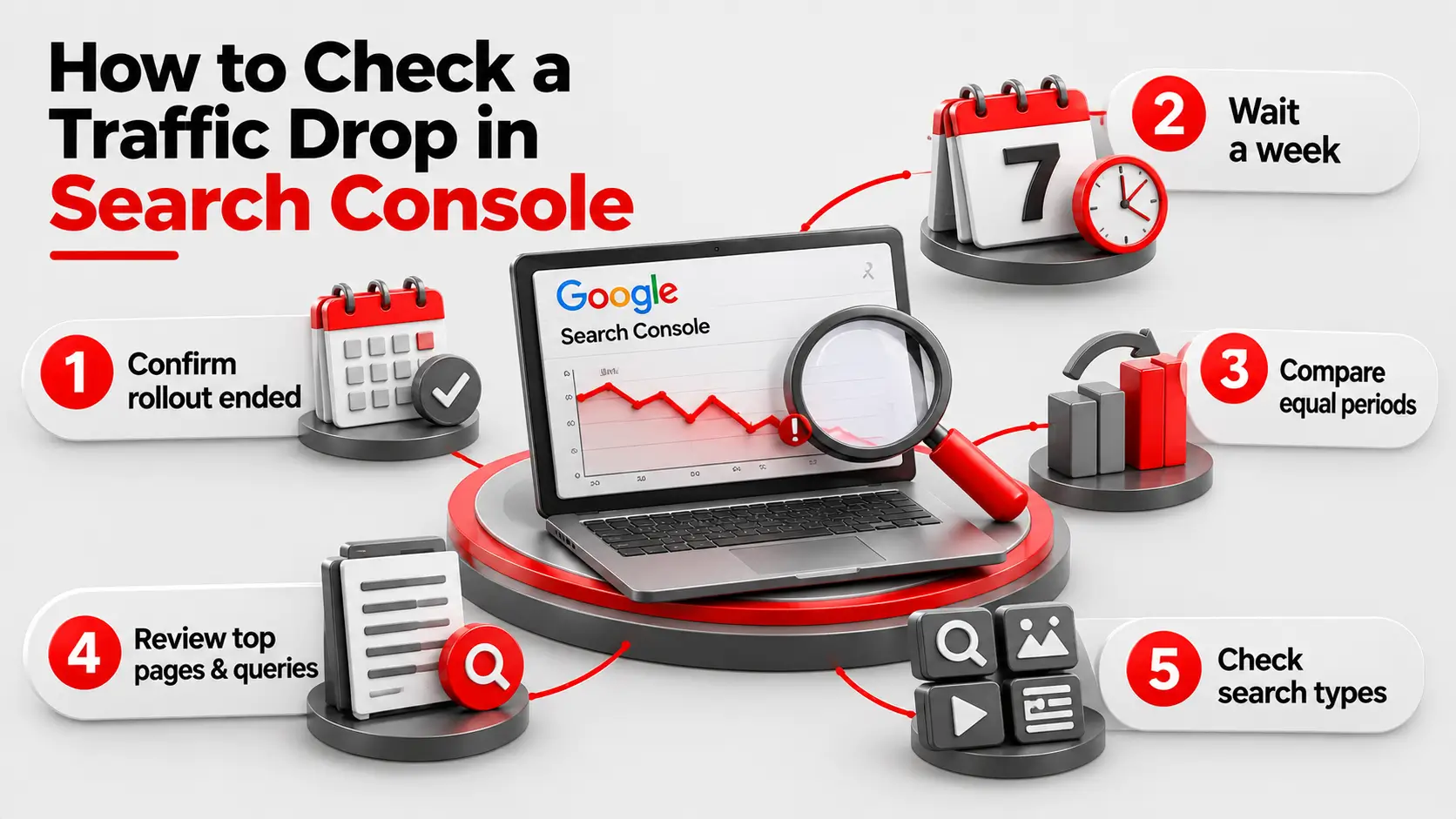
- Confirm the rollout has ended. Note the start and end dates from the dashboard.
- Wait a full week. Google recommends waiting at least a week after completion before analysing.
- Compare equal periods. Compare that week with the week before the rollout began.
- Review top pages and queries. Check how each one ranked before and after.
- Separate search types. Compare Web, Images, Video and News, since a drop in one may not appear in another.
The Search Console performance report shows clicks, impressions, click-through rate and average position for these comparisons.
How Large Is the Drop?
The size of the change decides what you do next.
| Drop in position | Example from Google | What to do |
|---|---|---|
| Small | Position 2 to 4 | Take no drastic action; avoid changing pages that already perform well |
| Large and sustained | Position 4 to 29 | Carry out a deeper assessment of the site and the affected pages |
How to Assess a Large Drop
Start with the whole site, not individual pages. Google asks you to judge honestly whether the site delivers helpful, reliable, people-first content. Its guidance also suggests asking trusted people with no link to your site to run the same self-assessment.
Then examine the pages that lost the most. For each one:
- Identify the query it used to rank for and what searchers wanted.
- Open the pages that now outrank it and note what they answer that yours does not.
- Check whether the information is accurate, current and clearly sourced.
- Look at readability: headings, structure, and how quickly the page answers the question.
Rewriting or restructuring a page to serve readers better is a sound change. Adding a few keywords is not.
What Should You Avoid After a Drop?
- Quick fixes. Google warns against removing page elements because of an SEO rumour. Make changes that serve users and last.
- Deleting content in a panic. Deletion is a last resort for content that cannot be salvaged. Google adds that wanting to delete whole sections often signals that they were built for search engines first, and removing them can help the rest of the site.
- Changing everything at once. You will not learn which change helped.
- Paying for a guaranteed recovery. Nobody controls Google’s rankings, and no provider can promise a position.
How Long Does Recovery Take?
Some changes can show effects within days, but Google says its systems may need several months to confirm that a site now produces helpful, reliable, people-first content over time. If several months pass with no change, the improvement may need to wait for the next core update. Google also makes smaller core updates that are not announced, and those can lift a site that has improved. Keep a dated log of every change you make, so later results can be tied to specific edits.
When to Ask for Professional Help
Bring in an expert when the drop is large, when you cannot tell which pages lost traffic or when your content needs a rewrite at scale. An SEO audit can compare your pages against the queries they lost, and professional content writing can rebuild thin pages around what searchers need. To discuss your site, contact me.
Frequently Asked Questions
How often does Google release core updates?
Google says it makes significant, broad changes several times a year and lists them on its ranking updates page. It also releases smaller core updates without an announcement.
Does a core update penalise my website?
No. A core update is not a penalty and does not target specific sites. A lower position usually means other pages now fit the query better. A manual action is separate and appears in Search Console.
How long should I wait before analysing my traffic?
Wait until the rollout has finished, then at least one more full week. Then compare that week with the week before the rollout began.
Should I delete pages that lost traffic?
Usually not. Improve them first. Delete only content that cannot be salvaged, and only after you have judged it against what searchers want.
Can I recover my rankings after a core update?
Often, rankings can improve, but nobody can guarantee it. Google says confirmation can take several months and may need a later core update.
Is a drop during the rollout a reason to change my site?
No. Rankings can move while a rollout is still under way. Wait for the finish date and the full week before you decide.